

Why Rock Bands Last Forever (And Pop Groups Don't)
Look, we all know that person. The one who's still wearing their Metallica shirt from 1991. The one who's seen Iron Maiden seventeen times. The one who can list every AC/DC album in chronological order, complete with lineup changes and production drama.
Now compare that to someone who was obsessed with a pop group five years ago. Chances are, they've moved on. New sound, new vibe, new artist. It's just how it works.
But why? What makes rock band longevity so different from the flash-in-the-pan nature of most pop groups? Let's dig in.
The Culture of a Band vs. The Cult of Personality
Here's the thing about rock bands: they're usually a unit. Four or five people who've battled it out in a van, argued over guitar solos, and somehow survived the experience. There's a shared identity. When you're a fan of Led Zeppelin, you're not just following Robert Plant, you're invested in the whole package. The riffs, the drums, the mystique of the band.

Pop groups, on the other hand, often operate differently. Many are assembled by producers and labels specifically to capture a moment. Nothing wrong with that, it's a business model that works. But it creates what we call a "cult of personality." The focus is on individual star power, choreographed perfection, and trend-riding. When the trends shift (and they always do), the foundation crumbles.
Think about it: The Rolling Stones have been touring since your grandparents were young. Why? Because they built something that transcended any single member. Even when band members changed, the culture remained. Pop groups, more often than not, are tied to a specific era. Once that era passes, so does the relevance.
Rock Fans Are In It for the Long Haul
There's a loyalty in rock music culture that's almost tribal. Rock fans don't just stream an album a few times and move on, they live with the music. They debate which album is the best (it's always the one they discovered first, by the way). They wear the tour shirts until they're threadbare. They pass down their vinyl collections like family heirlooms.
This isn't accidental. Rock music often deals with themes that age well: rebellion, identity, struggle, freedom. These aren't trend-based concepts. They're human experiences that resonate whether you're 16 or 60. A teenager discovering Nirvana in 2026 can connect with "Smells Like Teen Spirit" the same way someone did in 1991. That's staying power.
Pop music, while often brilliant in its own right, typically captures a specific moment in time. It's about what's happening right now. The production, the lyrics, the aesthetic, they're designed to dominate the current cultural conversation. That's not a weakness; it's a feature. But it does mean that what feels urgent and essential today might feel dated in five years.
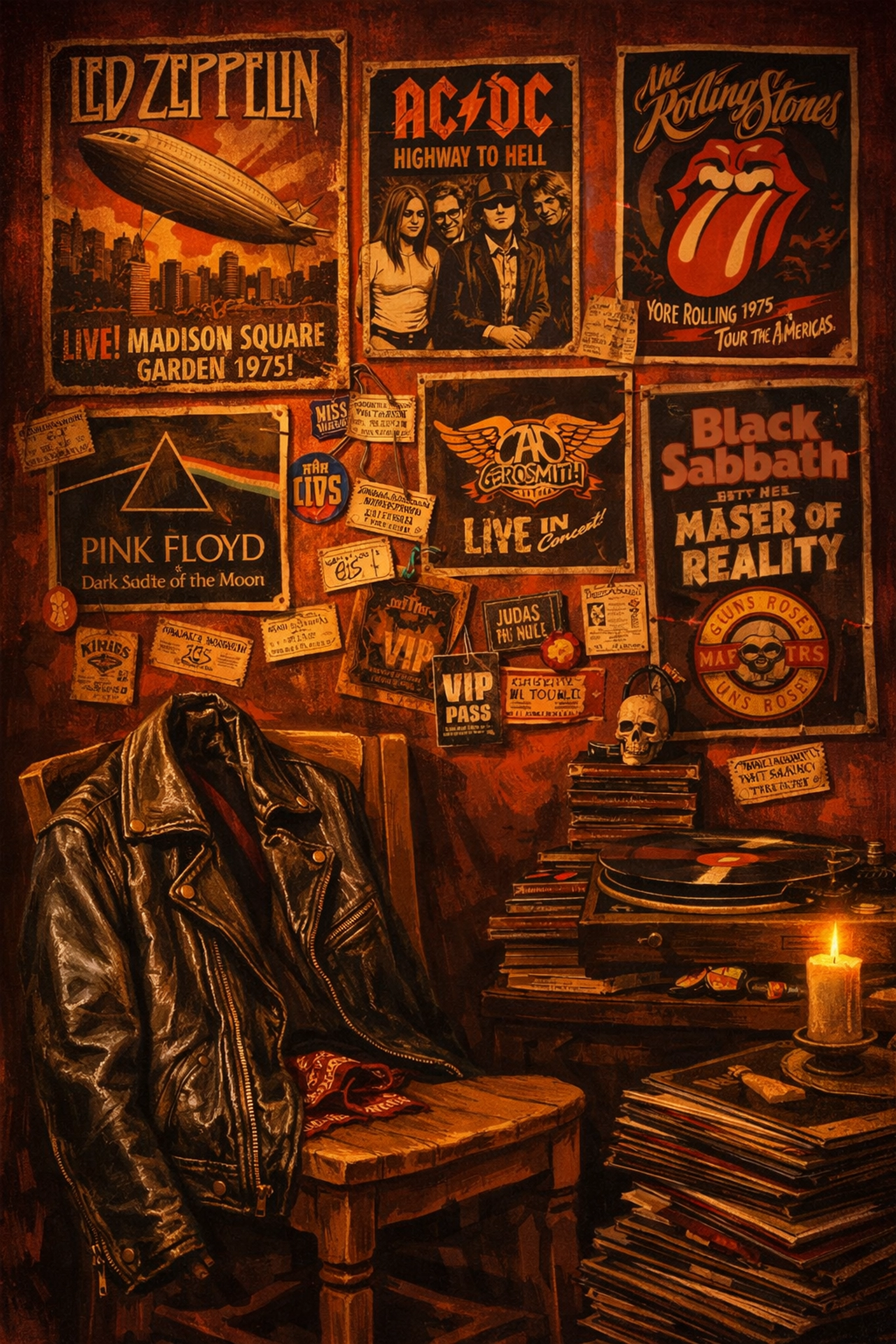
Decades of Albums, Tours, and Evolution
Rock bands tend to evolve slowly. They'll release an album, tour it for two years, take a break, then come back with something that builds on what came before. Fans get to grow with the band. There's time to digest, to form deep connections with the music.
Look at Foo Fighters. They've been releasing albums since 1995, and their fanbase has only grown. Each record feels like a continuation of a conversation, not a reinvention designed to chase streams. Fans trust that the next album will be worth the wait because the band has earned that trust over decades.
Pop groups rarely get that runway. The industry demands constant output, constant reinvention, and constant virality. The pressure is immense. Many pop acts burn bright for 18 months to three years, then either break up or fade into nostalgia tours. It's not anyone's fault, it's just the nature of the beast.
The Role of Official Band Merch: More Than Just Clothing
Let's talk merch for a second, because this is where loyalty really shows up.
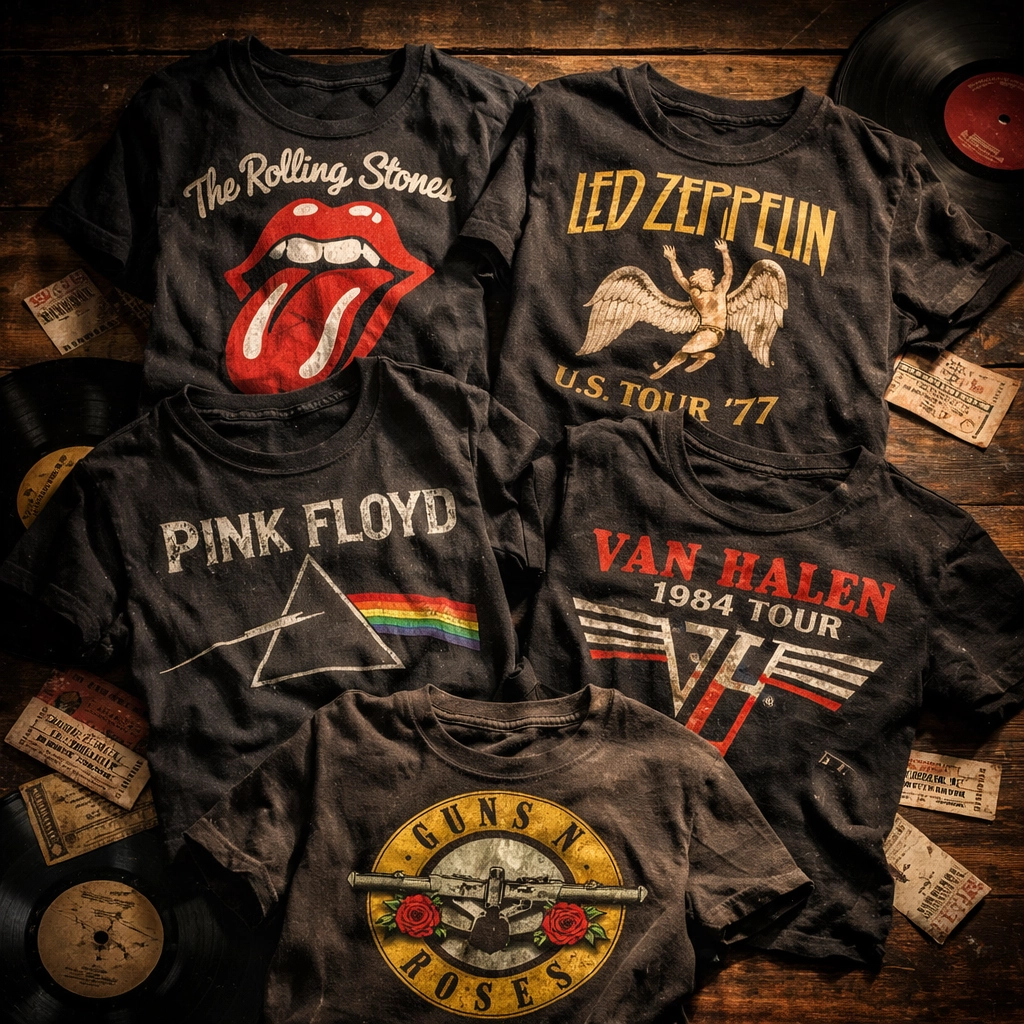
When someone buys an official rock band t-shirt, they're not just buying clothing. They're buying a badge of honor. A statement of identity. A way to signal to the world: "This is who I am. This is what I stand for."

Rock fans wear their allegiance. You'll see the same person in a Black Sabbath shirt one day, a Ramones shirt the next. It's part of their uniform, their identity. And because rock bands have longevity, that merch never really goes out of style. A vintage Led Zeppelin tee from the '70s? Still cool. A Backstreet Boys shirt from 1999? That's... a nostalgic joke at best.
This is why band merchandise remains such a crucial revenue stream for rock artists. It's not just about the money, it's about maintaining that connection with fans. Every time someone wears that shirt, they're advertising not just the band, but an entire culture. And in rock, that culture lasts.
Trend-Driven vs. Timeless
Pop music thrives on trends. It has to, that's the genre's DNA. The beats, the fashion, the visuals, they're all calibrated to capture the zeitgeist. When you nail it, you dominate. But trends move fast, and what's hot today is retro tomorrow.
Rock music aims for something different: timelessness. Sure, you can hear the '70s in classic rock or the '90s in grunge, but the core appeal doesn't rely on being of the moment. A great rock song from 1975 can still hit just as hard in 2026. It's not trying to be trendy; it's trying to be real.
This isn't to say pop music isn't real, it absolutely is. But the business model and audience expectations are fundamentally different. Pop asks: "What do people want right now?" Rock asks: "What will people still care about in twenty years?"
The Modern Reality: It's Complicated
Okay, real talk: the line between rock and pop has blurred significantly. And longevity in music is tougher for everyone these days. The research shows that newer bands, regardless of genre, rarely last more than ten years. The industry has changed. Streaming, social media, constant content demands: it's exhausting.
Many modern bands focus less on releasing new albums and more on touring, merchandise sales, and maintaining their brand. The pressure is real, and it leads to burnouts, hiatuses, and breakups across all genres.
But even with these challenges, there's still something different about rock band longevity. The culture around it, the fan dedication, the merchandising ecosystem: it's built for the long haul in a way that pop, by design, usually isn't.
Why This Matters
If you're someone who connects deeply with music, who wants to be part of something that lasts, rock offers that. It's a community that values history, loyalty, and authenticity. When you invest in a rock band: whether that's buying their albums, going to their shows, or wearing their official merch: you're joining something bigger than a fleeting trend.
Pop music will always have its place. It's fun, it's exciting, it captures moments brilliantly. But rock? Rock builds legacies.
So next time you see someone in a decades-old band shirt, remember: they're not just nostalgic. They're part of a culture that's designed to last. And in a world where everything feels disposable, that's pretty damn valuable.
What's your take? Are you a lifelong rock fan, or do you embrace the trend-hopping nature of pop? Either way, wear what you love: and if you're in the market for official band merch that'll last as long as your fandom, you know where to find us.